

In a corner of countless modern factories, a laser welding machine is moving at a speed of several meters per second, perfectly connecting two pieces of metal material. This beam of light, which is almost imperceptible to the naked eye, can generate temperatures of up to thousands of degrees, completing the work that traditional welding takes several seconds to achieve in a millionth of a second. The laser welding machine, the "tailor of light" in the industrial field, is quietly reshaping the entire industrial landscape from automobile manufacturing to electronic micro assembly with its incredible precision and efficiency.
The core advantage of laser welding technology lies in its astonishing energy density. A focused laser beam can have an energy density of 10 ^ 6-10 ^ 12W/cm ², which is 100-1000 times higher than traditional arc welding. This characteristic enables the laser to instantly melt the metal without creating a large heat affected zone, achieving the so-called 'cold working' effect. In Tesla's Gigafactory, the welding deformation of aluminum body parts has been reduced by over 70%, and the yield rate has increased to near perfection. In the precision production of Apple AirPods, laser welding has achieved micro welding tasks with micrometer level accuracy that traditional methods cannot match, pushing the reliability of consumer electronics products to new heights.
The industrial revolution of this technology is not only reflected at the micro level. The popularization of laser welding machines has completely changed the organizational logic of production lines. The traditional welding process requires a lot of manual intervention and quality inspection, while the fully automatic laser welding system integrates these processes into a continuous and seamless process. After Volkswagen introduced laser welding, its body production line speed increased by 40%, while saving 15% of material costs. More noteworthy is that laser welding has created new design possibilities - engineers can now boldly adopt combinations of dissimilar materials and complex geometric structures, as lasers can precisely control heat input and achieve dissimilar metal connections that traditional methods cannot handle.
The development trajectory of laser welding machines reflects the evolution direction of the entire industrial civilization. From early kilowatt level CO2 lasers to today's fiber laser systems, the size of the equipment has been reduced tenfold, but the efficiency has increased by a hundred times. This dual trend of miniaturization and efficiency is pushing laser welding from the heavy-duty manufacturing field to a wider range of micro nano manufacturing scenarios. In the field of medical implants, laser welding has achieved seamless connection of titanium alloy bone nails; In the power battery industry, it ensures reliable bonding of lithium-ion battery electrodes. Every application expansion is redefining the boundaries of 'manufacturing'.
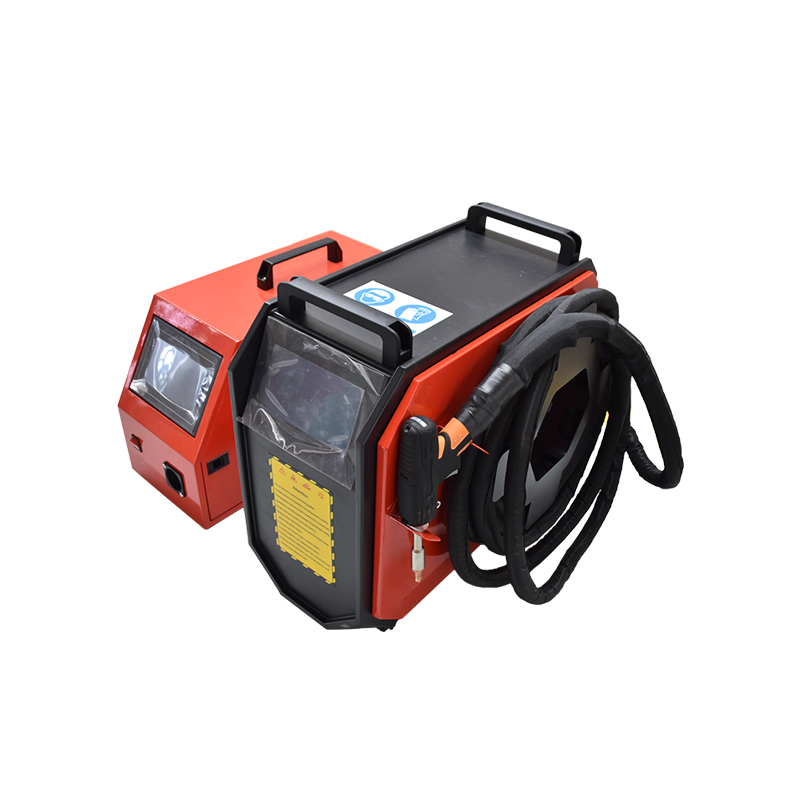
Looking back from the threshold of industrial intelligence, laser welding machines are no longer just tools, but have become the nerve endings of modern manufacturing systems. Its invisible beam weaves the hidden order of the material world, pushing humanity's pursuit of precision and efficiency to physical limits. When future historians write about the industrial revolution of the 21st century, laser welding technology will undoubtedly be remembered as a silent yet powerful force of change - it uses the needle and thread of light to stitch together the last gap between the digital world and the physical world.