

In today's rapidly developing manufacturing industry, laser welding technology has gradually replaced traditional welding methods with its unique advantages, becoming an indispensable processing method in the field of precision manufacturing. Laser welding machines achieve material connection through high-energy density laser beams, providing unprecedented processing possibilities for various industries. This article will comprehensively analyze the significant advantages of laser welding machines compared to traditional welding methods.
1、 Excellent welding accuracy
The most prominent advantage of laser welding machines is their unparalleled processing accuracy:
Can achieve ultra-fine welding below 0.1mm, meeting the high-precision industry needs of microelectronics, medical devices, etc
The heat affected zone is extremely small (usually only 0.1-0.5mm), greatly reducing workpiece deformation
The beam diameter can be finely adjusted, with a minimum of micrometer level
Specially suitable for precision welding of thin sheet materials (0.1-3mm)
This level of precision makes laser welding an ideal choice for precision instruments, electronic components, and microstructure manufacturing.
2、 Extremely high production efficiency
Laser welding machines have significant advantages in production speed:
Welding speed can reach several meters to tens of meters per minute (2-10 times that of traditional welding)
No need to replace welding rods or wires, strong continuous operation ability
In most cases, there is no need for further processing, saving time in polishing and leveling processes
Integrate automated systems to achieve 24-hour uninterrupted production
Taking automobile body welding as an example, laser welding can reduce the traditional spot welding of 60 welding points to a continuous weld seam, and shorten the working hours by more than 60%.
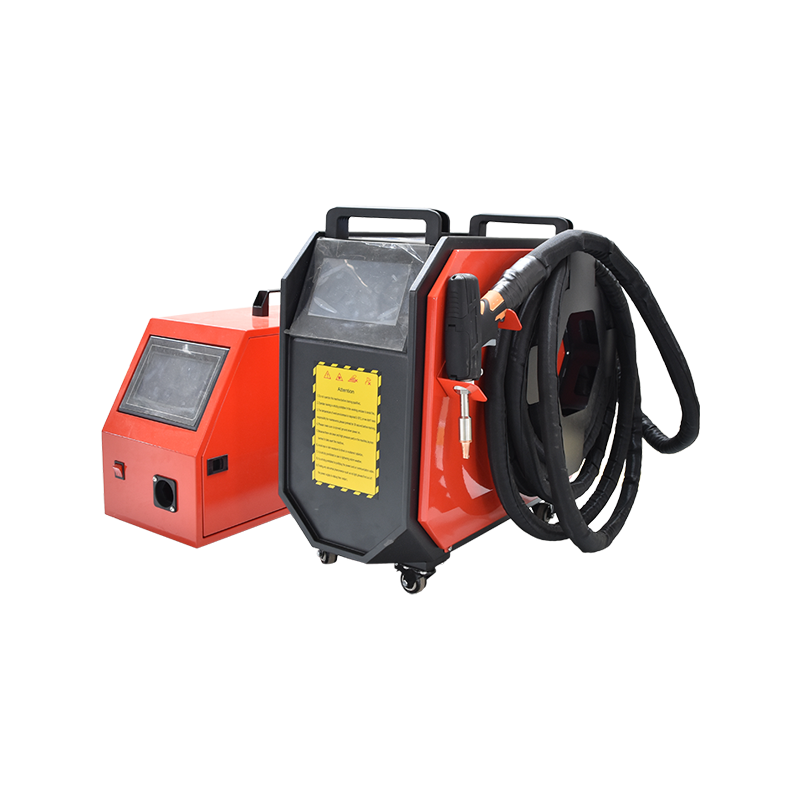
3、 Excellent material adaptability
Laser welding machines exhibit a wide range of material compatibility:
Weldable high melting point metals (such as molybdenum and tungsten) and dissimilar materials (such as copper aluminum)
Excellent performance in difficult to weld materials such as stainless steel, aluminum alloy, and titanium alloy
By adjusting parameters, it can adapt to materials of different thicknesses (0.02mm-30mm)
Welding of non-metallic materials can also be achieved in a vacuum environment
This material's adaptability greatly expands the application scenarios of laser welding, with excellent performance in fields ranging from aerospace to electronic packaging.
4、 Significant economic benefits
Although the initial investment is relatively high, the long-term cost of using a laser welding machine is lower
Energy consumption is only 30-50% of traditional welding
Extremely low material loss, no need for filling materials
Low maintenance cost, laser source lifespan can reach 100000 hours
Improve the yield rate (usually above 95%) and reduce waste losses
An actual case shows that a certain household appliance enterprise reduced the production cost of a single piece by 22% after adopting laser welding, and the investment return cycle was less than 2 years.